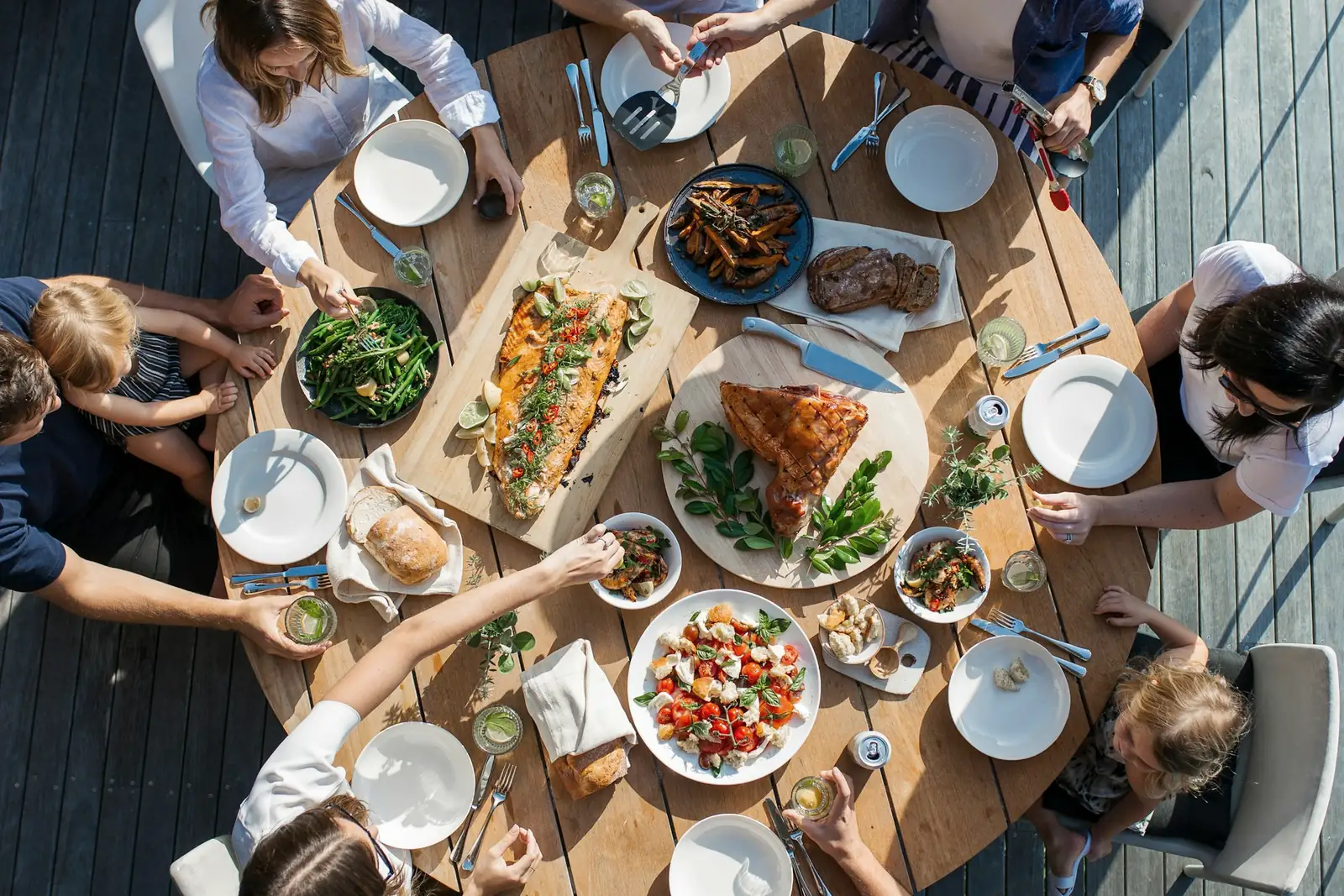
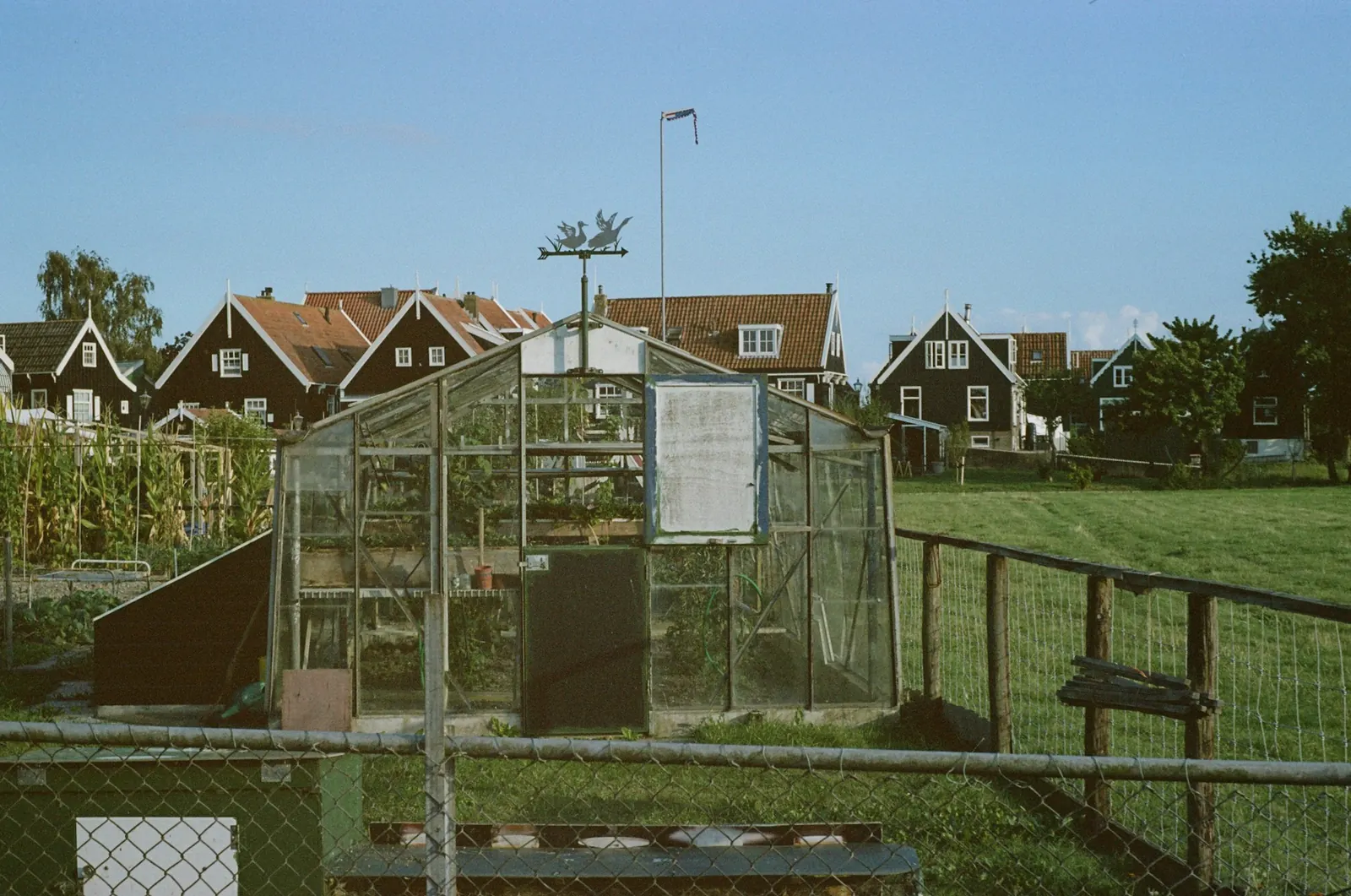
A friendly, honest guide for anyone, anywhere, who has daydreamed about shared dinners, a village of neighbours who know your name, and a smaller footprint. We cover what these places really are, how they run, which ones have lasted on four continents, and the parts nobody puts in the brochure.
Photograph: Luisa Brimble, Unsplash
01Introduction
What is an intentional community?
An intentional community is any group of people who choose to live near each other and share something on purpose: land, buildings, meals, money, values, or simply the job of looking after one another. That covers everything from a Danish street of families who eat together twice a week to a mountain eco-village in Mexico or a township in southern India with residents from dozens of countries.
What they have in common is a trade. You give up some privacy, some speed and some control over your surroundings. In return you get neighbours you actually know, shared resources you could never afford alone, and a say in how the place you live is run. Whether that suits you depends more on temperament than architecture, or country.
The idea travels well. The same basic models turn up in Scandinavia, the Americas, India and Australia, shaped by local law, climate and culture.
02Types
Co-housing, co-living, eco-villages and cooperatives: what is the difference?
The words get used loosely, and translations blur them further. These are the four models you will meet most often, whatever the country, and real places often mix two or three.
I
Co-housing
Private, complete homes clustered around a common house with a big kitchen, dining room and guest rooms. Residents usually design the scheme together and manage it themselves. Born in Denmark, where it is called bofællesskab, and now found across Europe, North America, Australia and beyond.
You own or rent
Your own home, plus a share of common areas
Money
Kept separate, with shared running costs
Best for
Families and older people who want real neighbours
II
Co-living
Usually a building run by a company or landlord, with private bedrooms and shared kitchens, lounges and workspaces. Community is often organised for you through events. Popular with young professionals and remote workers in cities worldwide.
You own or rent
Almost always rent, often on flexible terms
Money
One all-in fee to an operator
Best for
Trying shared living without long commitment
III
Eco-village
A rural or semi-rural settlement built around ecological, social and often cultural or spiritual goals. Expect gardens, natural building, shared land, and a lot of volunteer work. Many belong to the Global Ecovillage Network, which has regional networks around the world.
You own or rent
Varies hugely: leases, cooperative shares, land trusts, foundations
Money
Anything from separate to partly shared
Best for
Changing how you live, not just where
IV
Housing cooperative
A legal structure more than a lifestyle. Members own the whole building or estate together and each holds a right to occupy a home. Common in Scandinavia, Germany and Switzerland, and in Uruguay, where mutual-aid cooperatives build their own homes.
You own or rent
A share or membership, not bricks and mortar
Money
Monthly charges; share value set by the rules
Best for
Long-term, affordable, democratic housing
03Governance
How decisions get made
This is where communities live or die, and it is worth more of your attention than the solar panels. Most communities, on every continent, use some form of consensus: a proposal goes ahead only when nobody present blocks it. Done well, everyone can live with the result. Done badly, the most stubborn person holds a veto.
Many groups now use sociocracy or similar methods instead. Decisions are pushed down to small circles (the garden group, the finance group), and a proposal passes when nobody has a reasoned, serious objection, rather than when everyone is delighted. Others vote by majority on small matters and keep consensus for big ones.
Whatever the method, ask to read recent meeting minutes. They show what the group argues about and whether a few voices dominate.
The aim of Christiania is to build a self-ruling society, where each individual can help him- or herself freely while remaining responsible to the community as a whole.
From Christiania's 1971 statement of aims, in English translation. Source: Spatial Agency
Shared spaces, and who cleans them
The heart of classic co-housing is the common house: a large kitchen and dining room where residents take turns cooking for everyone a few evenings a week, plus laundry, workshops, children's play space and guest rooms. Because these are shared, private homes can be smaller.
Photograph: Jean Carlo Emer, Unsplash
Shared spaces need shared work. Most places expect a set number of hours each month for cooking, cleaning, gardening or committee work. Resentment about who is not pulling their weight is among the most common complaints anywhere, so ask how work is tracked.
04Places
Nine long-running communities on four continents
Examples, not recommendations. Between them they cover most models on this page, and each has lasted decades, including hard years.
Sættedammen and the Danish bofællesskab
Hillerød area, Denmark · residents moved in 1972
Often described as the first modern co-housing community. It grew from a 1967 newspaper article by Bodil Graae and the work of architect Jan Gudmand-Høyer, and set the pattern of private homes around a common house. American architects Kathryn McCamant and Charles Durrett popularised the English word "cohousing" in their 1988 book on the Danish model, helping carry the idea to North America.
Findhorn
Moray, north-east Scotland · since 1962
Founded by Peter and Eileen Caddy and Dorothy Maclean in a caravan park, Findhorn became a spiritual community and eco-village, and in 1995 hosted the conference that led to the Global Ecovillage Network. It is also a caution: the Findhorn Foundation closed its education programmes in 2023, and residents have since formed a community benefit society to take land and buildings into community ownership.
Christiania
Copenhagen, Denmark · since 1971
A former military area occupied in 1971 and run ever since through residents' meetings that aim for consensus. In 2012 a residents' foundation began buying the land from the state, and in 2024 residents and police together dug up Pusher Street to end its open cannabis trade: a reminder that self-government means owning your hardest problems.
Sieben Linden
Altmark, Saxony-Anhalt, Germany · since 1997
An eco-village of roughly 140 adults and children, famous for straw-bale buildings, including the three-storey Strohpolis completed in 2006. It offers guided tours and information weekends, making it one of the easier places to see a working eco-village.
Tamera
Alentejo, southern Portugal · since 1995
Founded by Dieter Duhm, Sabine Lichtenfels and Rainer Ehrenpreis as a peace research and education centre. Known for its water retention landscape, and for unconventional views on love and relationships that draw both admirers and critics. It runs introduction weeks during its guest season.
Twin Oaks
Louisa County, Virginia, USA · since 1967
Started on a former tobacco farm and loosely inspired by B.F. Skinner's novel Walden Two, Twin Oaks is one of the best-known income-sharing communities in North America. Around 100 adults pool their work and money: community businesses making tofu and hammocks help cover housing, food and health care. Anyone hoping to join first completes a three-week visitor period.
Huehuecoyotl
Tepoztlán, Morelos, Mexico · since 1982
Often called Mexico's first eco-village, founded by writer and activist Alberto Ruz Buenfil with fellow members of a travelling theatre troupe, the Illuminated Elephants. Around twenty people live on a small site in the mountains of Tepoztlán, and it is known for its cultural and educational programmes.
Auroville
Near Puducherry, Tamil Nadu, India · since 1968
An experimental township founded by Mirra Alfassa, known as the Mother, and inaugurated on 28 February 1968 with delegates from 124 nations. About 3,300 people from some 54 countries lived there in 2021. Its charter says it "belongs to nobody in particular", yet since 1988 an Indian law has set its governance, with a government-appointed board alongside the residents' assembly: a lesson in how national law shapes even the most idealistic project.
Crystal Waters
Queensland, Australia · since 1987
A permaculture village designed by Max Lindegger, Robert Tap, Barry Goodman and Geoff Young: 83 privately owned one-acre plots in small clusters, set within 640 acres that include large areas of common land. It was a finalist in the 1996 World Habitat Awards.
Children should have a hundred parents.
Bodil Graae, headline of her article in Politiken, 9 April 1967 (translated from the Danish "Børn skal have hundrede forældre"). Source: Nasjonalmuseet, Norway
Photograph: Andy Arbeit, Unsplash
05Visiting
How to visit without being a tourist
Communities are homes first, not attractions, and that is true in every country. Instead of turning up unannounced:
Use the front door. Look for guest programmes, open days, tours or information weekends, and book them. Expect to pay.
Stay longer than a day. A week of volunteering or a guest stay shows you the washing-up rota as well as the sunset.
Visit twice, in different seasons. A rural eco-village in midwinter or the rainy season is a different place from the same village at its best.
Check what your visa allows. In some countries volunteering in return for food and a bed counts as work, so confirm the rules before you arrange a working stay abroad.
Ask before photographing people, children or homes, and follow any local signs.
Talk to the quiet ones, not only the person assigned to show visitors round, and if you can, to someone who has left.
The missing link between utopia and the outdated single-family house.
Title of Jan Gudmand-Høyer's 1968 article in Dagbladet Information, in English translation. Source: Nasjonalmuseet, Norway
06Before you commit
Questions to ask before you join or buy in
Tick them off as you get clear, written answers. A good community will be glad you asked. Your ticks stay in this browser only.
One note before you start: legal structures differ by country. Co-ops, associations, foundations, land trusts and shared-ownership schemes can carry very different rights from one place to the next, and some countries restrict what foreigners may own. Mexico, for example, requires foreign buyers near the coast or a border to hold residential property, usually through a bank trust. Get advice from an independent lawyer who practises in that country before you pay anything.
0 of 13 answered
07Caution
Red flags worth walking away from
Most communities are run by decent people. Some are not, and good people can still build structures that fail. Be wary of:
Pressure to pay quickly. "Only two plots left" has no place in a decision this large.
You pay in, someone else owns. Money into a project where the land stays in one person's or company's name.
No written exit terms, or exit terms that depend on "the group deciding at the time".
Secret or vague finances. No accounts, no budget, no answer on debt.
Permits "in progress" for years, or homes that cannot legally be lived in.
No former members to talk to, or former members described only as "not ready".
One leader with the final word, whatever the website says about consensus.
Pressure to drop outside ties with family, friends or your own income.
The honest downsides
Meetings take real time. Privacy is lower than you expect. Selling can be slow, lenders are wary of unusual structures, and the keenest members often burn out. Abroad, add a new language and a legal system you do not yet know.
And why people stay anyway
Children with dozens of adults looking out for them. Older people who are not alone. And the plain pleasure of walking to dinner and knowing everyone at the table.
08Answers
Frequently asked questions
Is co-housing cheaper than ordinary housing?
Not usually to buy into. Private homes in co-housing tend to be priced like other new homes nearby, and the shared buildings add cost. Savings come later and are modest: shared tools, cars, guest rooms and meals. Some cooperative and rental models are genuinely cheaper.
What is the difference between co-housing and a commune?
In co-housing each household has its own complete home and its own money, and shares a common house and grounds. In a commune members typically pool income or assets and share most living space. Co-housing is about neighbourliness with privacy; a commune is about a shared economic life.
Can I get a mortgage to buy into an intentional community?
It depends on the legal structure. If you buy a home on its own legal title, a normal mortgage is often possible. If you are buying cooperative shares or a membership right, many mainstream lenders will not lend, and in some countries borrowing as a foreign buyer is hard in any case. Ask which lenders previous members used.
Do I have to be spiritual to live in an eco-village?
No. Some well known communities, such as Findhorn in Scotland and Auroville in India, grew out of spiritual teachings, while others are mainly ecological, political or practical projects. Ask directly what shared practices are expected and whether they are optional.
Can I join a community in another country?
Often, yes. Many communities are international, and Auroville alone has residents from dozens of countries. But you will need a legal right to live there, which usually means a residence visa rather than a tourist stay. Ask the community how its foreign members arranged theirs.
How long should I take before joining a community?
Longer than feels necessary. Visit more than once, stay at least a week, sit in on a meeting, and speak to people who have left. A trial period of several months to a year is a good sign, not an obstacle.
09About
About Common Ground
Common Ground is an independent guide to shared living around the world.